

In your own words, what does the Dragonfly mission entail, and how did it get this name?
Much like in the overall mission description, this is sci-fi come to life. We will be using a nuclear-powered rotorcraft in a search for extra-terrestrial life and to study pre-biotic chemistry taking place on Titan in order to help unlock the mysteries surrounding the formation of life on Earth. The mission got its name because we’ll be a ‘flying creature’ on Titan that lands in different locations. With the early renderings of the lander and development of the logo, Dragonfly became the name.
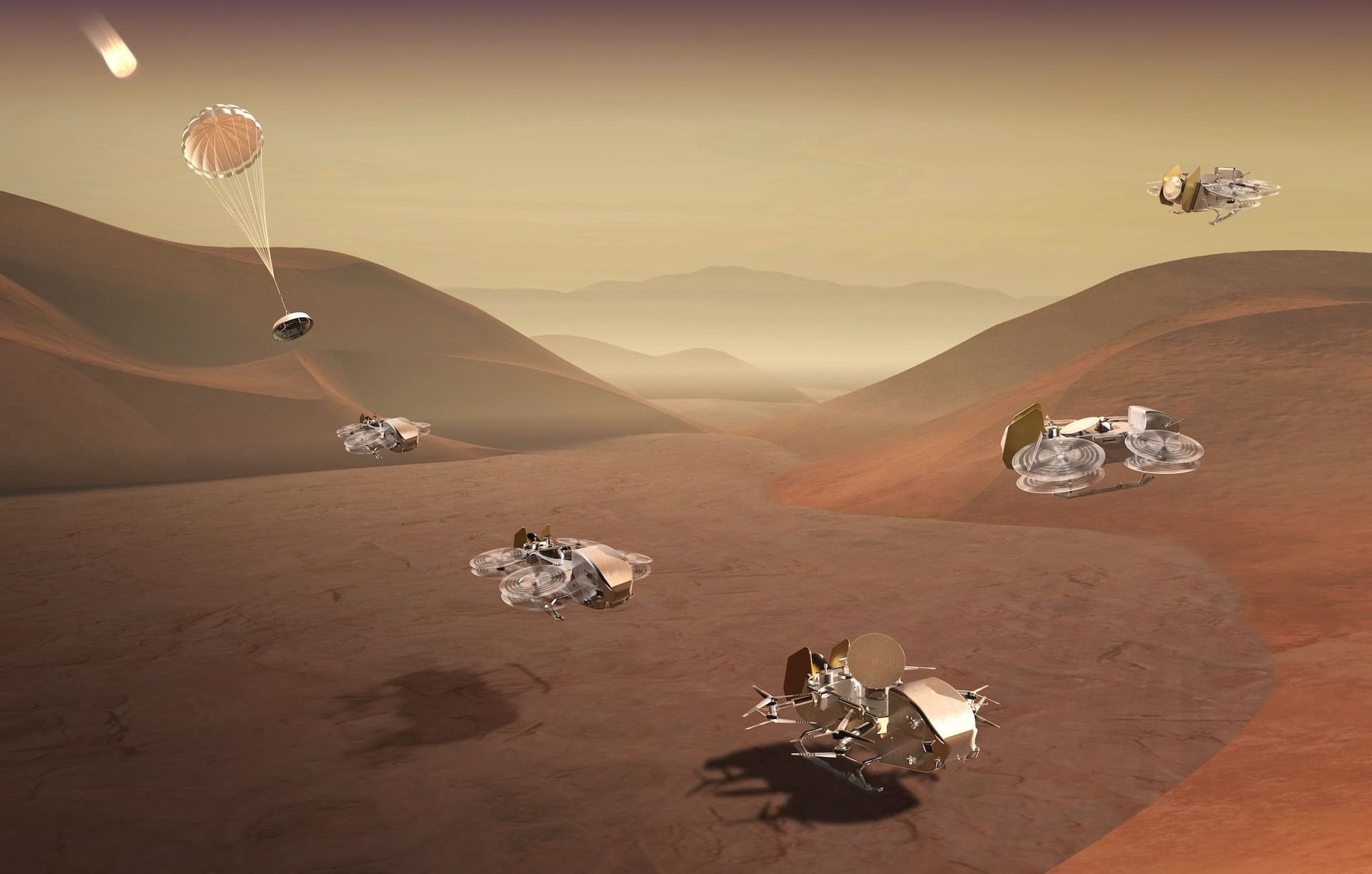
Dragonfly Mission Overview Image Credit: NASA/Johns Hopkins APL/Steve Gribben
Dragonfly Mission Overview Image Credit: NASA/Johns Hopkins APL/Steve Gribben
Dragonfly Mission Overview Image Credit: NASA/Johns Hopkins APL/Steve Gribben

Dragonfly is a collaboration between NASA and the Johns Hopkins Applied Physics Laboratory. What is the Applied Physics Laboratory, and what makes Johns Hopkins the right university partner for missions like this?
The Johns Hopkins University Applied Physics Laboratory is one of the only University Affiliated Research Centers (UARC) with the ability to implement NASA missions from end-to-end, meaning, when NASA awards a mission to APL, we have the ability to develop and execute the entire mission throughout its lifecycle. We can build, test, and fly deep space interplanetary NASA discovery missions.

Power and functional testing on Dragonfly’s Integrated Electronics Module (IEM) and Power Switching Unit (PSU) in the cleanroom at the Johns Hopkins Applied Physics Laboratory. Image credit: NASA/Johns Hopkins APL/Ed Whitman
Power and functional testing on Dragonfly’s Integrated Electronics Module (IEM) and Power Switching Unit (PSU) in the cleanroom at the Johns Hopkins Applied Physics Laboratory. Image credit: NASA/Johns Hopkins APL/Ed Whitman
Power and functional testing on Dragonfly’s Integrated Electronics Module (IEM) and Power Switching Unit (PSU) in the cleanroom at the Johns Hopkins Applied Physics Laboratory. Image credit: NASA/Johns Hopkins APL/Ed Whitman
Throughout your career, you’ve also supported school initiatives and innovations that expand access to science and engineering education. Why has that work been important to you, and how do you see it shaping the future of the field?
In my side gigs as both an educator and running a non-profit for education, trying to get as many students exposed to career opportunities in space is really important to me. Our project teams are comprised of a variety of different jobs that require varying skill sets; however, they all require the ability for someone to work as part of a dynamic team. I always try and stress the importance of leadership skills, communication skills, and what it means to be a good team member. The most important trait is someone’s desire to want to show up and do a good job. We can teach and train people to be good at their jobs, but a highly motivated person will be great!

Dragonfly team members gather in front of the Titan Chamber. Image credit: NASA/Johns Hopkins APL/Ed Whitman
Dragonfly team members gather in front of the Titan Chamber. Image credit: NASA/Johns Hopkins APL/Ed Whitman
Dragonfly team members gather in front of the Titan Chamber. Image credit: NASA/Johns Hopkins APL/Ed Whitman
For those who want to follow along, how can they stay connected as the mission develops?
The best place to start at APL’s Dragonfly website, where you can dig deep into the mission and the technology, stay up to date with news, browse photos and videos, meet our team, and even pilot the Dragonfly rotorcraft in AR.
You can also follow along on NASA and the APL's social media accounts: @nasasolarsystem and @johnshopkinsapl.
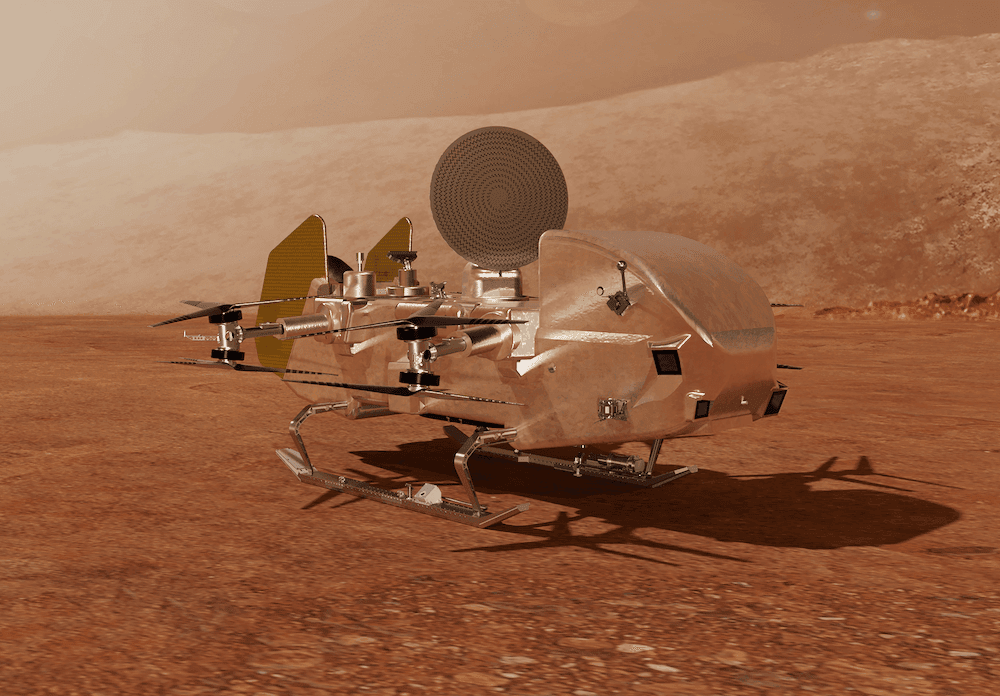
Image credit: NASA/Johns Hopkins APL/Steve Gribben
Image credit: NASA/Johns Hopkins APL/Steve Gribben
Image credit: NASA/Johns Hopkins APL/Steve Gribben