

The Cat’s Head Nebula in the Carina Nebula, captured in October 2026 by NASA’s Hubble and James Webb Space Telescopes. Image credit: STScI.
The Cat’s Head Nebula in the Carina Nebula, captured in October 2026 by NASA’s Hubble and James Webb Space Telescopes. Image credit: STScI.
The Cat’s Head Nebula in the Carina Nebula, captured in October 2026 by NASA’s Hubble and James Webb Space Telescopes. Image credit: STScI.
Abstract
Fifty years ago, a report to the National Academy of Sciences proposed a bold new model for space-based astronomy—one that would help reshape how humanity explores the universe. Modestly titled Institutional Arrangements for the Space Telescope, the report called for a Space Telescope Science Institute to serve as the “interface between large space observatories and the scientific user community,” nationally and internationally. It envisioned an autonomous institute operating under contract to NASA and overseen by a consortium of research universities, balancing scientific independence with public accountability.
The vision became reality in 1981 when the Space Telescope Science Institute (STScI) was established on the Homewood Campus of Johns Hopkins University, managed by the Association of Universities for Research in Astronomy (AURA). But this was an unprecedented experiment in how to organize and support a major scientific research enterprise. Would it work? Drawing on key moments in the history of astronomy and milestones from NASA’s Hubble Space Telescope mission, this talk explores the origins of STScI, the evolution of its mission, and the amazing scientific discoveries that have transformed our view of the universe.
Meet the Speaker: David Herring
Division Head, Office of Public Outreach, Space Telescope Science Institute
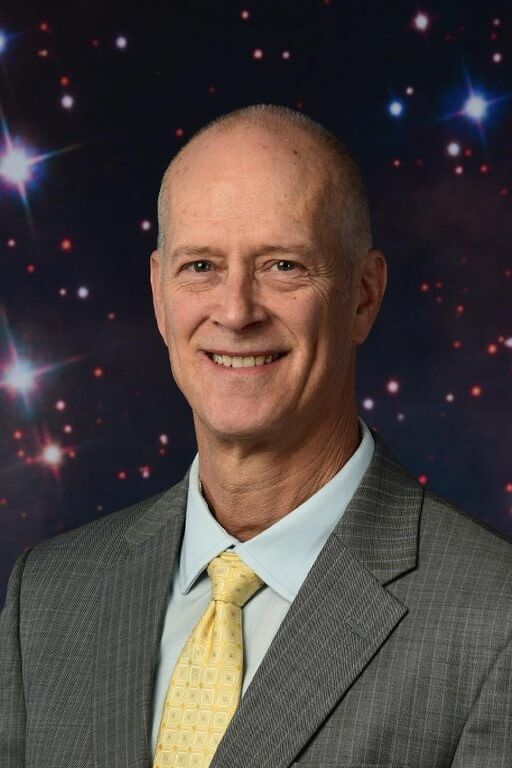 David Herring is the Division Head within STScI’s Office of Public Outreach, where he leads strategic communications and public engagement efforts to share the awe and excitement of exploring the universe with the public. David is a senior science communicator with more than 30 years of experience working within the Earth, climate, and space science communities.
Throughout his career, Mr. Herring has championed an evidence-based, audience-centered approach grounded in the science of science communication, emphasizing trust, usability, public values, and meaningful engagement between scientific institutions and the communities they serve. In addition to his institutional leadership roles, he has advised executive federal leaders, collaborated extensively across government, academia, nonprofit organizations, and philanthropic networks, as well as contributing to national conversations on climate communication, resilience, and public engagement with science.